

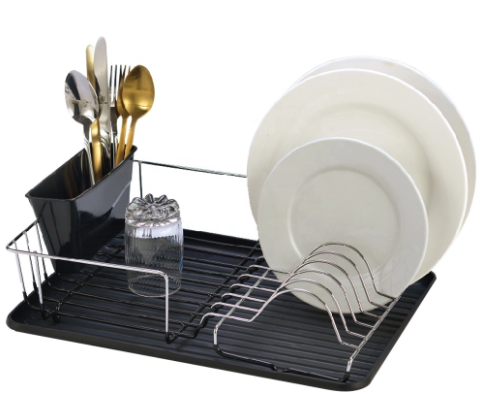
1. Material: Dish racks are usually made of plastic, stainless steel or bamboo. Each material has its own advantages and disadvantages. Plastic is lightweight and affordable, while stainless steel is durable and rust-resistant. Bamboo is environmentally friendly and antibacterial.
2. Size: Choose a dish rack that fits the size of your kitchen sink and the amount of dishes you usually do. Large dish racks may take up too much countertop space, while small dish racks may not meet your needs.
3. Capacity: The capacity of the dish rack is determined according to the number of plates, bowls, cups and utensils it can hold. When choosing a dish rack, consider the size and shape of your dishes. Some dish racks come with removable cup and wine glass holders.
4. Drainage system: The drainage system of the dish rack is essential to air-dry dishes and prevent standing water. Look for dish racks with sloping bases that allow water to flow toward the sink, or removable trays to catch water.
5. Utensil Rack: Many dish racks have an integrated utensil holder for utensils and cooking tools. Some racks are removable to make cleaning the dish rack easier.
6. Collapsible: If you have limited storage space, a collapsible dish rack is a good choice. It can be easily stowed away when not in use and unfolded when needed.
7. Style: Dish racks come in different styles, from traditional to modern. Choose a style that suits your kitchen decor and personal taste.
In conclusion, a well-designed dish rack can make washing dishes more efficient and organized. When choosing a dish rack, consider material, size, capacity, drainage, utensil holder, foldability, and style. With these features in mind, you can find a dish rack that meets your needs and enhances your kitchen experience.